
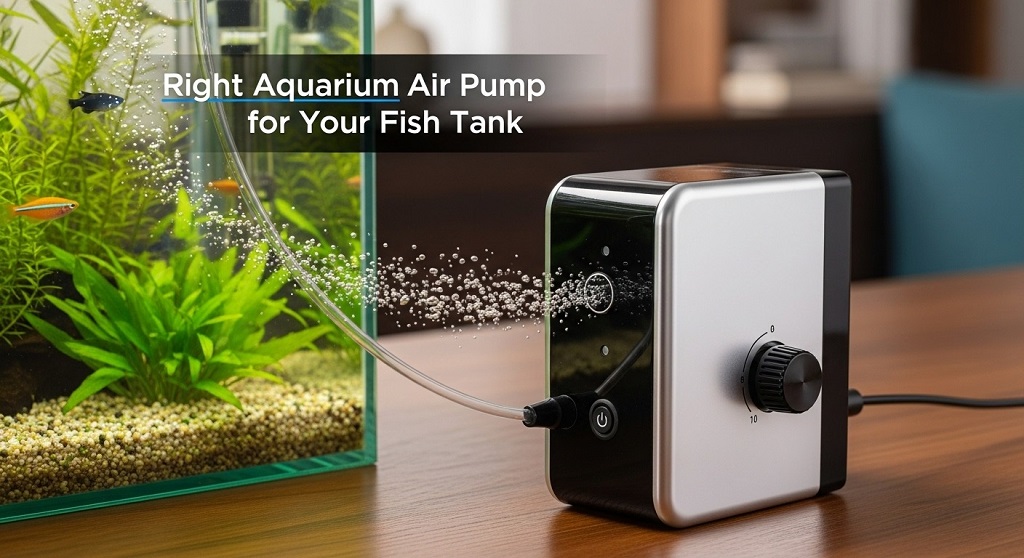
The right aquarium air pump is one that delivers sufficient airflow (measured in liters per hour) to maintain proper fish tank oxygenation based on your tank size, depth, and stocking level.
You may not see oxygen in your tank. But your fish feel it every second.
Low oxygen levels cause stress. Stress weakens immunity. Weak fish get sick faster. In extreme cases, fish gasp at the surface and die. Many beginners think filters alone solve the issue. Often, they do not.
An aquarium air pump improves gas exchange. It pushes air through tubing into an air stone or sponge filter. The bubbles rise. Surface agitation increases. Oxygen enters the water. Carbon dioxide escapes.
According to common aquaculture research, dissolved oxygen below 5 mg/L begins to stress many freshwater species. At 2 mg/L, survival drops rapidly. While home tanks rarely hit those extremes, overcrowding, high temperatures, and poor circulation reduce oxygen fast.
Choosing the right air pump is not about buying the biggest model. It is about matching output to tank needs. This guide explains how to do it using a practical air pump size guide, clear tank aeration tips, and real-world case data.
How Do You Know If Your Fish Tank Needs an Air Pump?
Snippet answer: Your tank needs an air pump if oxygen levels are low, fish gasp at the surface, stocking is heavy, water temperature is high, or you use sponge filters.
Problem: Many aquariums rely only on hang-on-back or internal filters. These provide circulation, but not always enough surface agitation.
Agitation: Limited surface movement reduces oxygen exchange.
Solution: Add controlled aeration.
Signs of Low Oxygen
- Fish gasping at the surface
- Rapid gill movement
- Lethargic behavior
- Sudden deaths after temperature spikes
Warm water holds less oxygen. At 30°C, oxygen saturation drops compared to 20°C. If you live in a warm climate or use a heater, fish tank oxygenation becomes critical.
Air pumps are also essential for:
- Sponge filters (common in breeding tanks)
- Heavily stocked community tanks
- Goldfish aquariums (high waste producers)
- Hospital or quarantine tanks
In planted tanks with low stocking and good surface movement, an air pump may not be mandatory. But it remains a reliable safety backup.
How Does an Aquarium Air Pump Improve Fish Tank Oxygenation?
Snippet answer: An air pump improves oxygenation by increasing surface agitation, which enhances gas exchange between water and air.
There is a common myth. Bubbles themselves do not directly “add oxygen” in large amounts. The key factor is surface movement.
How It Works
- The pump pushes air through airline tubing.
- Air exits through an air stone or diffuser.
- Bubbles rise and disturb the surface.
- Oxygen enters as carbon dioxide exits.
More agitation equals more gas exchange. That stabilizes dissolved oxygen.
In a 2021 hobbyist case study shared in a freshwater forum experiment, a 40-gallon tank with high stocking measured 4.8 mg/L dissolved oxygen before aeration. After installing a dual-outlet pump with two air stones, oxygen increased to 6.5 mg/L within hours. Fish activity improved noticeably.
The lesson: circulation plus aeration creates stability.
How Do You Choose the Right Air Pump Size for Your Tank?
Snippet answer: Choose an air pump rated for your tank’s gallon size and depth, ensuring airflow output matches stocking level and accessories.
This is where most mistakes happen.
Too small: weak bubbles, poor oxygenation.
Too large: excessive turbulence, noise, stress.
Air Pump Size Guide (General Rule)
Most manufacturers recommend:
- Small tanks (5–20 gallons): 1–2 L/min
- Medium tanks (20–50 gallons): 2–4 L/min
- Large tanks (50–100 gallons): 4–8 L/min
But depth matters. The deeper the tank, the harder the pump must work. Pressure increases with water column height.
Quick Reference Table
| Tank Size | Recommended Pump Output | Best Use Case |
|---|---|---|
| 10 gallons | 1–1.5 L/min | Betta, shrimp, nano fish |
| 20–30 gallons | 2–3 L/min | Community tank |
| 40–55 gallons | 3–5 L/min | Moderate stocking |
| 75+ gallons | 5–8+ L/min | Goldfish, cichlids |
If you run multiple sponge filters or decorations, choose a dual-outlet pump or a stronger model with a control valve.
Should You Choose a Single or Dual Outlet Air Pump?
Snippet answer: Choose a single outlet for small tanks and a dual outlet for larger tanks or multiple accessories.
Single outlet pumps suit nano tanks and simple setups.
Dual outlet pumps allow:
- Two air stones
- Two sponge filters
- Split airflow across tank length
In larger aquariums, distributing aeration prevents dead zones. Dead zones trap waste and reduce circulation.
If you plan to upgrade your tank, buying a slightly stronger adjustable pump now can prevent replacement costs later.
How Does Tank Depth Affect Air Pump Performance?
Snippet answer: Deeper tanks require stronger air pumps because water pressure increases with depth.
A 24-inch deep tank needs more pressure than a 12-inch tank of equal volume.
Air pumps are rated not just by airflow (L/min) but also maximum pressure. If the pump is too weak, bubbles become inconsistent.
Tank aeration tips for deep aquariums:
- Use high-pressure rated pumps
- Keep airline tubing short
- Avoid excessive bends
- Use quality air stones
Resistance reduces effective airflow. Efficiency matters.
What Features Should You Look for in a Quiet and Efficient Air Pump?
Snippet answer: Look for adjustable airflow, low decibel rating, rubber feet, and energy efficiency.
Noise complaints are common. Cheap diaphragm pumps vibrate loudly.
Key Features
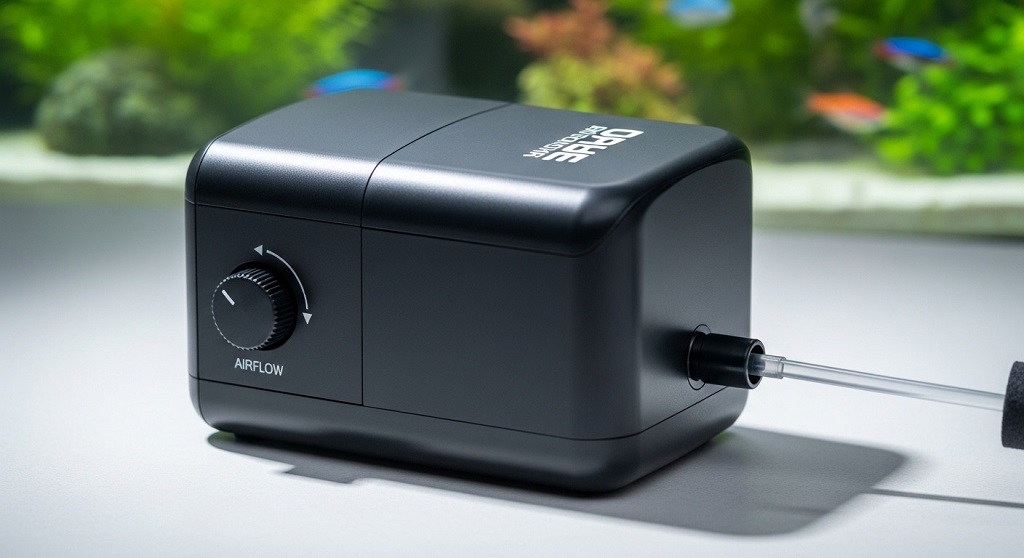
- Adjustable airflow knob
- Check valve compatibility
- Low power consumption (2–10 watts typical)
- Rubber stabilizing feet
- Durable diaphragm
In a home environment, pumps under 40 dB are considered quiet. Placing the pump above water level or using a check valve prevents back siphoning.
Energy cost is minimal. A 5-watt pump running 24/7 consumes about 3.6 kWh monthly. In most regions, that costs very little compared to filtration systems.
Can You Over-Aerate a Fish Tank?
Snippet answer: Yes, excessive aeration can create strong currents that stress certain fish species.
Problem: More bubbles must mean better oxygen.
Agitation: Not always.
Solution: Balance airflow.
Species like bettas prefer calmer water. High turbulence exhausts them.
Signs of over-aeration:
- Fish struggling to swim
- Substrate disruption
- Plants uprooted
Use a control valve to regulate output. Stability is the goal.
What Are Common Mistakes When Choosing an Aquarium Air Pump?
Snippet answer: Common mistakes include ignoring tank depth, buying based only on gallons, and skipping accessories like check valves.
Top Errors
- Choosing cheapest model without specs
- Ignoring noise levels
- Not accounting for multiple devices
- Using long tubing without pressure compensation
- Skipping maintenance
Diaphragms wear out. Replacing them every 1–2 years maintains performance.
Maintenance is simple. Clean air stones monthly. Replace clogged diffusers.
What Accessories Improve Air Pump Efficiency?
Snippet answer: Use check valves, gang valves, air stones, and sponge filters to maximize performance and safety.
- Check valve: Prevents water backflow.
- Gang valve: Splits airflow control.
- Air stone: Creates fine bubbles.
- Sponge filter: Provides biological filtration.
Fine bubbles increase surface disturbance consistency. This supports better fish tank oxygenation.
Conclusion: How Do You Make the Final Decision?
Choosing the right aquarium air pump is about matching airflow to biology.
Follow the air pump size guide. Consider stocking level. Factor in depth. Avoid extremes. Monitor fish behavior.
A small upgrade today prevents losses tomorrow.
If you are setting up a new aquarium or improving an existing one, review your current aeration system. Test dissolved oxygen if possible. Adjust before problems appear.
Action Step: Measure your tank size and depth now. Compare with the table above. Choose a pump that supports long-term fish health. Stability builds thriving aquariums.
Related Topics: How to Maintain Aquarium During Monsoon Humidity Changes
What Next: How to Care for Aquarium Plants When Leaves Turn Yellow
Frequently Asked Questions (FAQ)
1. Do all fish tanks need an air pump?
Answer: Not all tanks require one, but most benefit from added aeration, especially heavily stocked or warm-water tanks.
2. How long should I run my aquarium air pump?
Answer: Most aquarists run air pumps 24/7 for consistent oxygen levels and biological stability.
3. Is a bigger air pump always better?
Answer: No. Oversized pumps can create excessive current and stress fish. Choose based on tank needs.
4. Can I turn off the air pump at night?
Answer: It is not recommended in heavily stocked tanks. Oxygen levels naturally drop at night.
5. What happens if my air pump stops working?
Answer: Oxygen levels may decline, especially in warm or crowded tanks. Replace or repair quickly.
6. How do I reduce air pump noise?
Answer: Place it on a soft surface, ensure rubber feet are intact, and avoid contact with hard surfaces.
Related Topics: How to Maintain Aquarium During Monsoon Humidity Changes
What Next: Slow Growing Colorful Fish for Small Aquariums


