Yellow leaves on aquarium plants can be alarming for any fish keeper. However, this common problem usually signals a fixable issue with your tank’s environment. Understanding why your plants are turning yellow is the first step toward restoring their health and vibrant green color.
Aquatic plants need specific conditions to thrive. When those conditions aren’t met, yellowing leaves serve as a warning sign. Fortunately, most causes of yellow leaves can be corrected with simple adjustments to lighting, nutrients, or water quality.
Understanding Why Aquarium Plant Leaves Turn Yellow
Yellow leaves indicate that something in your aquarium environment needs attention. Plants lose their green color when they cannot produce enough chlorophyll. This pigment gives plants their green appearance and helps them convert light into energy.
Several factors can interfere with chlorophyll production. Nutrient deficiencies rank among the most common culprits. Additionally, poor lighting conditions often contribute to yellowing. Water quality issues can also stress plants and cause discoloration.
Identifying the specific cause requires examining your tank’s conditions carefully. Therefore, you’ll need to check multiple aspects of your aquarium setup. Each potential problem has distinct symptoms that can help you diagnose the issue.
Checking and Adjusting Light Levels
Light serves as the primary energy source for aquatic plants. Without adequate lighting, plants cannot perform photosynthesis effectively. Consequently, leaves begin to yellow and weaken over time.
Most aquarium plants need between eight and ten hours of light daily. Too little light starves plants of energy. However, too much light can promote algae growth without helping your plants. Finding the right balance is essential.
Consider the intensity of your aquarium light as well. Different plant species have varying light requirements. Low-light plants like java fern and anubias need less intense lighting. Meanwhile, carpeting plants and red-colored species typically demand stronger light sources.
Upgrading to a quality LED aquarium light can make a significant difference. Modern LED fixtures provide the full spectrum of light that plants need. They also allow you to control intensity and duration more precisely than older lighting systems.
Addressing Nutrient Deficiencies
Plants require multiple nutrients to maintain healthy growth and green coloration. When essential nutrients are missing, yellowing occurs in predictable patterns. Learning to recognize these patterns helps you identify which nutrients your plants lack.
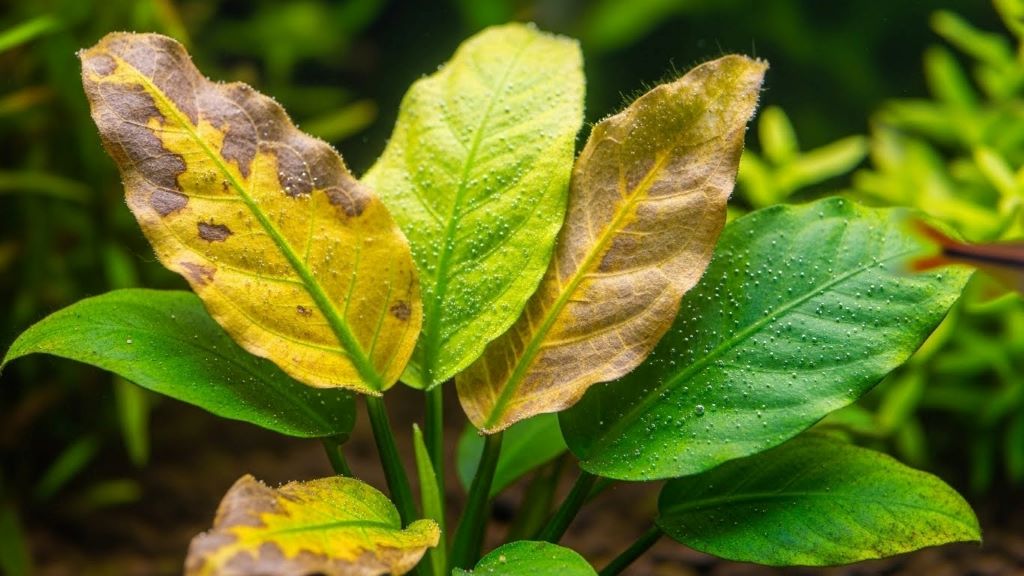
Iron deficiency causes new leaves to turn yellow while veins remain green. This condition, called chlorosis, is common in planted aquariums. Nitrogen deficiency causes older leaves to yellow first, starting from the bottom of the plant. Potassium deficiency creates yellow spots and holes in leaves, particularly around the edges.
Adding liquid fertilizers designed for aquarium plants can resolve most nutrient deficiencies. These products contain a balanced mix of essential nutrients including nitrogen, phosphorus, potassium, and trace elements. Follow dosing instructions carefully to avoid over-fertilizing, which can harm fish.
Root tabs provide another excellent option for plants that feed primarily through their roots. These slow-release fertilizer tablets are buried in the substrate near plant roots. Species like amazon swords and cryptocoryne benefit greatly from root tabs.
The substrate itself plays an important role in plant nutrition. According to research from Smithsonian’s National Zoo & Conservation Biology Institute, aquatic plants absorb nutrients both through their leaves and roots, making substrate choice crucial for long-term plant health. Nutrient-rich planted tank substrates provide better support than plain gravel or sand.
Testing and Improving Water Quality
Water parameters significantly impact plant health. Poor water quality stresses plants and makes them more susceptible to problems. Regular testing helps you maintain optimal conditions for plant growth.
Check your water’s pH level first. Most aquarium plants prefer slightly acidic to neutral water, with a pH between 6.5 and 7.5. Extreme pH levels can prevent plants from absorbing nutrients even when those nutrients are present.
Water hardness also matters for plant health. Very hard water contains high levels of minerals that can interfere with nutrient uptake. Conversely, extremely soft water may lack important minerals that plants need. Aim for moderate hardness levels unless you’re keeping species with specific requirements.
High levels of organic waste contribute to plant problems as well. Decaying matter consumes oxygen and releases compounds that can stress plants. Regular water changes remove these harmful substances. Replace approximately 25 to 30 percent of your tank water weekly.
Proper filtration maintains water clarity and removes debris. However, ensure your filter doesn’t create too much current. Strong water flow can damage delicate plants and disturb newly planted specimens.
Examining Carbon Dioxide Levels
Carbon dioxide is essential for photosynthesis. Plants use CO2 along with light and water to produce energy and grow. In natural bodies of water, decomposing organic matter provides ample CO2. Aquariums, especially those with many plants, may not have enough naturally occurring CO2.
Signs of CO2 deficiency include slow growth and pale or yellowing leaves. Additionally, plants may struggle to thrive even when lighting and nutrients seem adequate. Injecting CO2 into your aquarium can dramatically improve plant health and coloration.
CO2 injection systems range from simple DIY setups to sophisticated pressurized systems. Pressurized systems offer precise control over CO2 levels. They use a cylinder of compressed CO2, a regulator, and a diffuser to add gas to the water.
For smaller tanks or budget-conscious aquarists, liquid carbon supplements provide an alternative. These products supply carbon in a form that plants can use. While not as effective as true CO2 injection, they still offer benefits for plant growth.
Pruning and Maintaining Affected Plants
Once you’ve identified and corrected the underlying problem, address the damaged leaves. Yellow leaves rarely recover their green color. Moreover, they can drain energy from the plant as it tries to maintain dying tissue.
Remove severely yellowed or brown leaves with sharp scissors or pruning tools. Cut as close to the stem as possible without damaging healthy tissue. This encourages the plant to focus its resources on producing new, healthy growth.
Some yellowing on older leaves is normal as plants age. Even healthy plants occasionally shed their oldest leaves. Therefore, don’t worry if a few lower leaves yellow while the rest of the plant looks vigorous.
After pruning, monitor new growth carefully. New leaves should emerge green and healthy once you’ve corrected the environmental issues. If new growth continues to yellow, review your aquarium conditions again. You may need to make additional adjustments.
Preventing Future Yellowing Problems
Consistent maintenance prevents most causes of yellow leaves. Establish a regular schedule for tank care tasks. This routine approach helps you catch problems early before they severely impact your plants.
Test water parameters weekly, especially in new or heavily planted tanks. Keep a log of your test results to identify trends over time. Sudden changes in pH, hardness, or ammonia levels can indicate developing problems.
Maintain a consistent lighting schedule using a timer. Plants grow best with predictable day and night cycles. Irregular lighting confuses plants and disrupts their natural processes.
Research the specific needs of each plant species in your aquarium. Different plants have different requirements for light, nutrients, and water conditions. Grouping plants with similar needs makes care easier and more effective.
Clean your aquarium glass and decorations regularly to maximize light penetration. Algae buildup on surfaces blocks light from reaching your plants. Similarly, keep your light fixtures clean for optimal output.
Conclusion
Yellow leaves on aquarium plants signal environmental problems that need attention. However, with proper diagnosis and care, you can restore your plants to health. Most cases of yellowing result from inadequate lighting, nutrient deficiencies, poor water quality, or low CO2 levels.
Address these issues systematically by testing conditions and making appropriate adjustments. Provide adequate lighting for eight to ten hours daily. Supplement nutrients through liquid fertilizers or root tabs. Maintain excellent water quality through regular changes and testing. Consider adding CO2 if your plants still struggle despite other corrections.
Regular maintenance and attention to plant needs prevent yellowing problems before they start. With consistent care, your aquarium plants will reward you with lush, green growth that creates a beautiful underwater landscape for your fish.
Frequently Asked Questions
Can yellow aquarium plant leaves turn green again?
No, leaves that have already turned completely yellow will not return to green. Once a leaf loses its chlorophyll, the damage is permanent. However, correcting the underlying problem allows the plant to produce new, healthy green leaves. Remove yellowed leaves to help the plant focus energy on new growth.
How long does it take for aquarium plants to recover from yellowing?
Recovery time varies depending on the cause and severity of the problem. After correcting environmental issues, you should see improvement in new growth within one to three weeks. Fast-growing plants like hornwort and water sprite recover more quickly than slow-growing species like anubias. Complete recovery may take several months.
Should I add fertilizer if my plant leaves are yellow?
Fertilizer can help if nutrient deficiency is causing the yellowing. However, test your water first to determine if nutrients are truly lacking. Over-fertilizing can create algae problems and harm fish. Start with half the recommended fertilizer dose and increase gradually while monitoring plant response.
Do LED lights prevent aquarium plants from turning yellow?
Quality LED lights can help prevent yellowing by providing the proper spectrum and intensity plants need. However, lights alone won’t solve yellowing if other problems exist. Plants also need adequate nutrients, CO2, and good water quality. LED lights work best as part of a complete plant care strategy.
Is it normal for some aquarium plant leaves to turn yellow?
Yes, occasional yellowing of the oldest, lowest leaves is normal as plants age. This natural process allows plants to redirect resources to newer growth. Concern is warranted when multiple leaves yellow simultaneously, when new growth emerges yellow, or when yellowing spreads rapidly throughout the plant.
Related Topics:
The Damp Truth: How Humidity Impacts Aquarium Light Performance (and What You Can Do About It)