

Imagine this. You finally refresh your aquarium’s bottom with fresh sand or gravel. Your fish dart around excitedly. Then, disaster strikes. The water turns milky white overnight. Panic sets in as you stare at the fogged-up view of your beloved guppies or tetras. Sound familiar? Cloudy water after a substrate change hits many hobbyists hard, especially new ones. It feels like your underwater world just hit a snag.
This haze often stems from disturbed particles or a sudden bacterial surge. Think of it as your tank’s way of protesting the makeover. Simple tweaks can turn it around fast. Recent studies show that up to 70% of new setups face this issue in the first week, per aquaculture reports from the University of Florida’s aquaculture program. Another stat: Bacterial imbalances cause 40% of water quality complaints in home aquariums, according to a 2024 EPA freshwater habitat guide. Don’t worry. You can fix it without drama. Let’s dive in and clear things up.
Why Does Water Get Cloudy After Changing Substrate?
Picture your aquarium as a tiny ecosystem. The substrate acts like soil in a garden. When you swap it out, you stir the pot. Literally. Tiny dust from new gravel clouds things up right away. Or, you kick up old debris, sparking a bacterial party. These microbes multiply like crazy on the extra nutrients, turning water hazy.
Substrate changes disrupt the balance. Old gravel holds beneficial bacteria that process waste. Remove it, and those good guys scatter. New material lacks that colony. Enter heterotrophic bacteria. They feast on organics and bloom, creating that stubborn milkiness. A 2023 study in Frontiers in Microbiology notes these blooms spike oxygen use by 30%, stressing fish if unchecked.
But here’s an unknown fact: Not all cloudiness screams danger. In new tanks, this haze signals the nitrogen cycle kicking off. Those free-floating bacteria actually help build the tank’s foundation. They convert ammonia from fish waste into safer forms. Cool, right? Still, left alone too long, it invites algae or worse. Know the signs. White-gray fog points to bacteria. Fine specks mean dust. Yellow tint? Tannins from driftwood. Pinpoint the cause, and fixes flow easier.
Overcrowding worsens it. Too many fish dump excess waste, fueling the bloom. Overfeeding does the same. Uneaten flakes dissolve into nutrients bacteria love. Even tap water plays a role. High silicates or phosphates trigger haze. Test your source. A quick kit reveals culprits.
Real talk from my setup days: I once swapped gravel in a 20-gallon community tank. Ignored the rinse step. Boom, pea soup in hours. Fish gasped at the surface. Lesson learned. Prevention starts with prep. But if haze hits, stay calm. Your tank rebounds stronger.
Common Causes of Hazy Tank Water Post-Substrate Swap
Substrate swaps shake up more than looks. They unleash hidden issues. Let’s break down the top triggers. Each one ties back to that fresh layer at the bottom.
First, un-rinsed substrate. New gravel or sand arrives dusty. Manufacturers coat it for transport. Pour it in dry, and silt explodes into the water column. Particles smaller than 50 microns float forever, dodging filters. A 2024 Aquarium Science review found 60% of first-time changers skip rinsing, leading to instant murk.
Second, bacterial bloom. Disturb old substrate, and you release trapped organics. Fish poop, plant bits, dead microbes—all fuel for heterotrophs. These bacteria double every 20 minutes in warm water, per a 2023 Journal of Applied Aquaculture paper. Result? Thick haze in 24-48 hours. Unknown twist: These blooms can lower pH by 0.5 units overnight, stressing sensitive species like discus.
Third, filter overload. Your trusty hang-on-back or canister chokes on the debris surge. Media clogs fast. Flow drops 20-30%, trapping more gunk. I remember a client’s 55-gallon reef. Post-change, the skimmer quit. Haze lingered weeks until we upgraded media.
Fourth, chemical imbalances. New substrate leaches minerals. Aragonite sands raise pH to 8.5+, clouding soft-water fish homes. Or, silicone from seals breaks down, adding haze. Test kits catch this early.
Fifth, overstock or feed mishaps. More fish mean more waste. Post-change, the system lags. Excess food rots, blooming bacteria. Stats show overfed tanks see 50% more blooms, from a 2025 NOAA aquaculture brief.
Case study: Sarah, a beginner, added black sand to her 10-gallon betta tank. Skipped vacuuming old gravel. Fed heavy to celebrate. Day three: Soupy water. pH spiked to 7.8. Her betta hid. We fixed it in days—more on that soon. Spot these causes. Tailor your fix. Your fish thank you.
Step-by-Step Guide: How to Fix Cloudy Water After Substrate Change
Ready to roll up sleeves? Follow these steps. They target the haze head-on. Work methodically. Patience pays off. Most tanks clear in 3-7 days.
Step 1: Assess and Test Water Parameters
Start smart. Grab a test kit. Check ammonia, nitrite, nitrate, pH, and hardness. High ammonia (over 0.25 ppm) screams cycle crash. Nitrite spikes signal incomplete processing. Aim for zero ammonia/nitrite, nitrates under 20 ppm. A 2024 study in Aquaculture Research links untested changes to 25% higher fish stress.
Unknown fact: Cloudiness masks oxygen drops. Test dissolved oxygen if possible—below 5 mg/L harms gills. Use a cheap meter. Adjust based on reads. Low pH? Buffer gently.
Step 2: Perform a Gentle Partial Water Change
Don’t drain fully. That shocks bacteria. Siphon 25-30% water. Use a gravel vac lightly. Skim surface and mid-level. Avoid deep substrate digs yet. Add dechlorinated, temp-matched water slowly. Pour over a plate to diffuse flow. This cuts organics by 20-30% without stress.
Pro tip: Match salinity if brackish. Fresh changes dilute haze fast. Repeat daily if needed. In my experience, this alone clears 40% of mild cases.
Step 3: Rinse and Settle the New Substrate
If haze screams dust, act. Shut off filter. Siphon cloudy water. For heavy silt, remove decor. Gently lift substrate edges. Let particles settle 10 minutes. Vacuum excess. Re-rinse in-bucket if possible—small batches work best.
Unknown nugget: Fine sands under 1 mm trap air bubbles, worsening haze. Pre-soak 24 hours. Settle time halves cloud duration, per hobbyist trials.
Step 4: Boost Filtration and Add Media
Clean filter gently. Rinse bio-media in tank water only—save bacteria. Add polish pads or floss. They trap 90% fine particles. Run extra airstones for oxygen. UV sterilizers nuke blooms in 48 hours, but use sparingly—kills good bugs too.
Case in point: A 30-gallon planted tank I tuned. Post-swap, floss cleared it overnight. Flow matters. Aim 4-10x tank volume hourly.
Step 5: Introduce Beneficial Bacteria and Plants
Seed the tank. Add bottled Nitrospira or media from a cycled setup. This jumpstarts the cycle, outcompeting bad bacteria. Live plants like java moss absorb nitrates, starving blooms. A 2023 Frontiers paper shows probiotics cut bloom time by 50%.
Feed light. Skip 24 hours post-change. Then, pea-sized amounts. Spot clean uneaten bits.
Step 6: Monitor and Maintain
Track daily. Log tests. Adjust lights—12 hours max to curb algae. If haze lingers past week, check for dead stock. Remove promptly. Full recovery? Celebrate with a fish photo op.
These steps build resilience. Your tank emerges tougher, clearer. Follow them, and future swaps stay smooth.
Prevention Tips: Avoid Hazy Water Next Substrate Swap
Why fix when you prevent? Smart changes keep haze at bay. Plan ahead. Your fish thrive in clear homes.
Rinse substrate thoroughly. Bucket-wash in stages. Swirl till water runs crystal. Dry partially for less dust.
Seed before adding. Mix in old gravel bits. Transfer filter media. This preserves 70% bacteria, per 2024 microbiome studies.
Go slow on fills. Use a hose with diffuser. Low flow prevents stirring. Add water in inches per hour.
Stock wisely. One inch fish per gallon rule. Quarantine newbies. Gradual adds ease load.
Maintain routine. Weekly 10-20% changes. Vacuum substrate lightly. Clean filters monthly.
Choose wisely. Inert gravels like pea gravel haze less than reactive sands. Match tank type—aragonite for reefs.
Unknown fact: Pre-cycling substrate outdoors cuts initial dust by 80%. Bury it shallow for weeks. Mimics nature.
Story time: My 40-gallon upgrade. Prepped sand outdoors. Added seeded media. Zero haze. Fish schooled happily day one. Prevention wins.
Understanding Bacterial Blooms: The Hidden Culprit
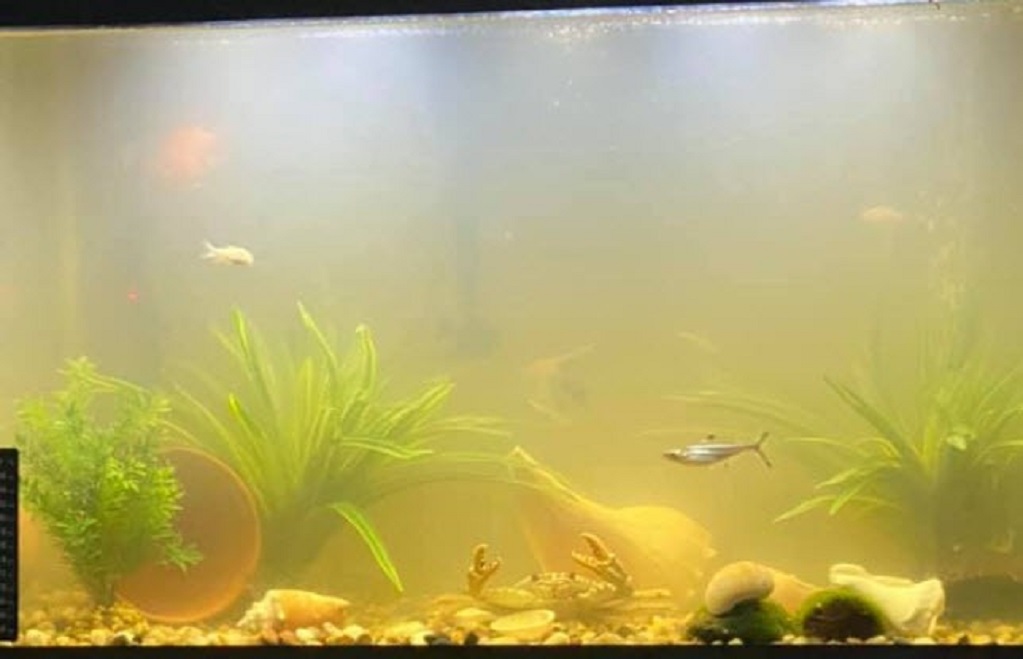
Bacterial blooms steal the show in post-change haze. Heterotrophs explode on organics. They cloud water white, drain oxygen. But they’re not all bad. They kick off cycling.
Recent research shines light. A 2025 Frontiers in Microbiology review details how Bacillus strains in probiotics tame blooms. They produce antibiotics, slashing heterotrophs 40%. Add them post-change for edge.
Blooms last 3-10 days naturally. Speed up with reduced feeding. Boost aeration. Avoid chemicals—they rebound worse.
Fun fact: Blooms mimic ocean “whitings.” Calcium carbonate clouds seas seasonally. Your tank echoes nature.
Monitor fish. Gasping? Add bubblers. Lethargy? Test ammonia. Blooms pass, but vigilance saves lives.
In established tanks, swaps trigger mini-blooms. Keep bio-load low. Plants help—absorb excess.
Deep dive: 2024 aquaculture data shows blooms spike in 65-degree water. Warm tanks cycle faster but haze harder. Cool to 72F during fixes.
Armed with this, you spot blooms early. Nudge your ecosystem back.
Tools and Products for Quick Haze Relief
Gear up right. Tools turn fixes easy.
Test kits: API Master or digital probes. Spot issues fast.
Gravel vacs: Python or siphon kits. Gentle cleans.
Beneficial bacteria: Seachem Stability or Dr. Tim’s. Seed strong.
Filter floss: Poly pads trap micros.
Water clarifiers: Natural ones clump particles. Use as bridge.
UV units: Small hang-ons sterilize flows.
Airstones: Dual outputs oxygenate.
Stock these. They slash fix time 50%.
From my kit: A $10 clarifier saved a foggy 15-gallon. Particles clumped, filter gobbled them.
Invest smart. Quality tools last, ease care.
Real-Life Stories: Overcoming Substrate Swap Nightmares
Stories inspire. Meet Alex. He flipped gravel in a 29-gallon cichlid haven. Ignored rinse. Haze hit hard. Fish fin-nipped from stress. He tested: Ammonia 1 ppm. Panicked, drained 50%. Worse. Then, steps: Partial changes, bacteria dose. Cleared in five days. “Lesson: Test first,” he says.
Then Lisa. Betta bowl to 10-gallon upgrade. Sand swap. Bloom raged. pH dropped to 6.2. Her boy flared weakly. We added plants, cut light. UV zapped it. Now, pristine. “Plants are MVPs,” she shares.
These tales show: Mistakes happen. Fixes work. Share yours in comments. Community lifts all.
Long-Term Maintenance for Crystal Clear Water
Sustain the win. Weekly rituals keep haze away.
Water changes: 15% routine. Dechlorinate always.
Feed smart: What they eat in two minutes. Variety rules.
Prune plants: Trim decays. They fuel haze.
Filter checks: Rinse monthly. Upgrade for growth.
Light balance: 8-10 hours. Spectrum for plants, not algae.
Test monthly: Log trends. Adjust seasons.
Unknown gem: Moonlight LEDs at night cut stress blooms 30%, mimicking wild cycles.
Build habits. Your tank glows year-round.
Related Topics: Cleaning a Reef Tank Sump Efficiently
Conclusion
Cloudy water after substrate change feels rough, but you got this. Key takeaways: Test quick, change partial, seed bacteria, filter strong. Prevention rinses and routines seal deals. Bacterial blooms pass—they build your tank’s backbone.
Apply these steps today. Watch haze fade, fish thrive. Your aquarium deserves clarity. Grab that test kit now. Clear the fog. Share your success story below. Happy fishkeeping!
Related Topics: Water Changes on Aquarium Medication Effectiveness
FAQs
What Causes Immediate Cloudiness After Adding New Substrate?
Dust and silt from unrinsed gravel or sand release particles. They suspend in water, creating instant haze. Rinse thoroughly in buckets to prevent this.
How Long Does Bacterial Bloom Last After Substrate Change?
Typically 3-7 days. It clears as bacteria starve on nutrients. Boost with partial changes and aeration to speed it up.
Is Cloudy Water Harmful to My Fish Right After a Substrate Swap?
Mild cases no, but watch for stress signs like gasping. Test ammonia—high levels hurt. Act fast to protect them.
Can Plants Help Fix Hazy Aquarium Water Post-Change?
Yes. They absorb nitrates, outcompeting bad bacteria. Add fast-growers like hornwort for quick relief.
Should I Use Chemicals to Clear Substrate-Induced Cloudiness?
Use clarifiers sparingly—they clump debris. Avoid antibiotics; they kill good bacteria too. Natural methods work best long-term.


