
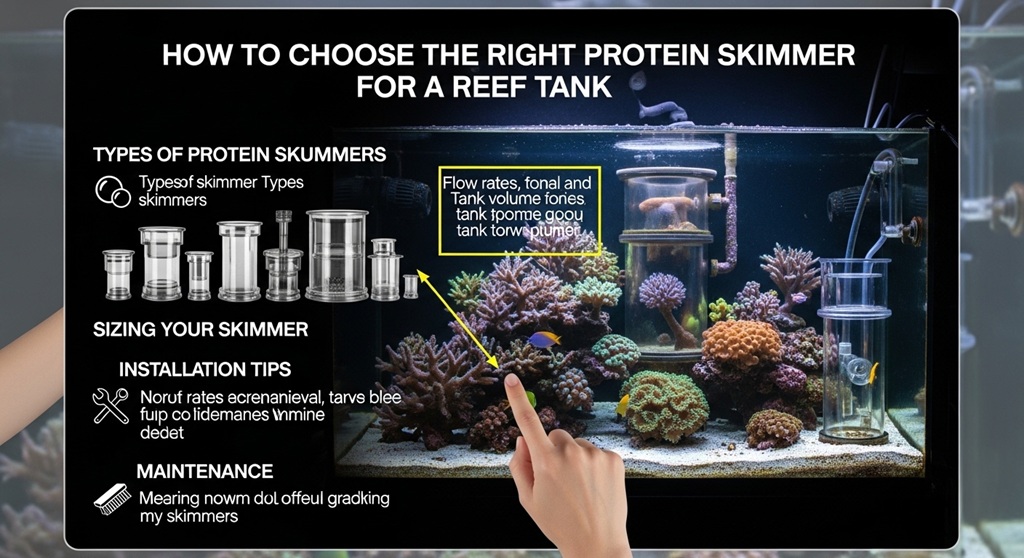
Struggling with cloudy reef tank water and uncertain about filtration? Choosing the right protein skimmer is essential for healthy, thriving corals and fish. In this guide, you’ll learn exactly how to choose protein skimmer for reef tank, with simple tips and comparisons for beginners.
A protein skimmer is one of the most important pieces of equipment in any reef tank setup. It removes organic waste, prevents algae blooms, and ensures your marine life flourishes. Picking the wrong skimmer can lead to poor water quality, stressed aquatic life, and constant troubleshooting. To choose the right protein skimmer for your reef tank, consider your tank’s size, bio-load, skimmer types, essential features, your budget, and maintenance needs. This article breaks down each step to help you make a confident, informed choice.
What is a Protein Skimmer and Why Is It Vital for Reef Tanks?
A protein skimmer removes organic waste before it breaks down into toxins in your reef tank. It’s vital because it keeps your water clear, reduces algae, and helps maintain stable water chemistry for healthy corals and fish.
Protein skimmers work by injecting tiny bubbles into a reaction chamber. Organic waste, fish food, and other pollutants stick to these bubbles and are carried to the surface, forming foam. This foam collects in a cup for easy removal. Without a protein skimmer, your tank would quickly accumulate dissolved organics, leading to high nitrate and phosphate levels, algae growth, and stressed or sick marine life.
- Enhances oxygenation in the tank
- Reduces need for frequent water changes
- Improves coral and fish health
How Do I Match Protein Skimmer Size to My Reef Tank?
To match a protein skimmer to your reef tank, choose a model rated for your total water volume, including sump, and account for your tank’s bio-load to avoid under or over-skimming.
Most skimmer manufacturers list a recommended tank size range in gallons or liters. Always use your tank’s actual water volume—include the sump if you have one. If your tank has a large number of fish or heavy feeding, select a skimmer rated for the higher end or even above your true volume. Slightly oversizing prevents poor performance, especially in heavily stocked reef tanks. Avoid large skimmers on lightly stocked tanks, as they may struggle to generate enough foam efficiently.
- Calculate total system volume (main tank + sump)
- Estimate your current and future livestock level
- Choose a skimmer rated up to 1.5x of your total volume for high bio-loads
What Are the Different Types of Protein Skimmers?
The main types of protein skimmers for reef tanks are in-sump, hang-on-back, and external skimmers, each suited for specific setups and space constraints.
In-sump skimmers sit inside your sump and are the most common for medium-to-large reef tanks. Hang-on-back skimmers (HOB) attach directly to the aquarium—ideal for smaller tanks without a sump. External skimmers work outside the sump or tank and are used for large or heavily loaded systems. Each type varies in installation complexity, maintenance requirements, and footprint. Match the skimmer type to your tank size, available space, and sump setup for best results.
Which Key Features Should I Look for in a Protein Skimmer?
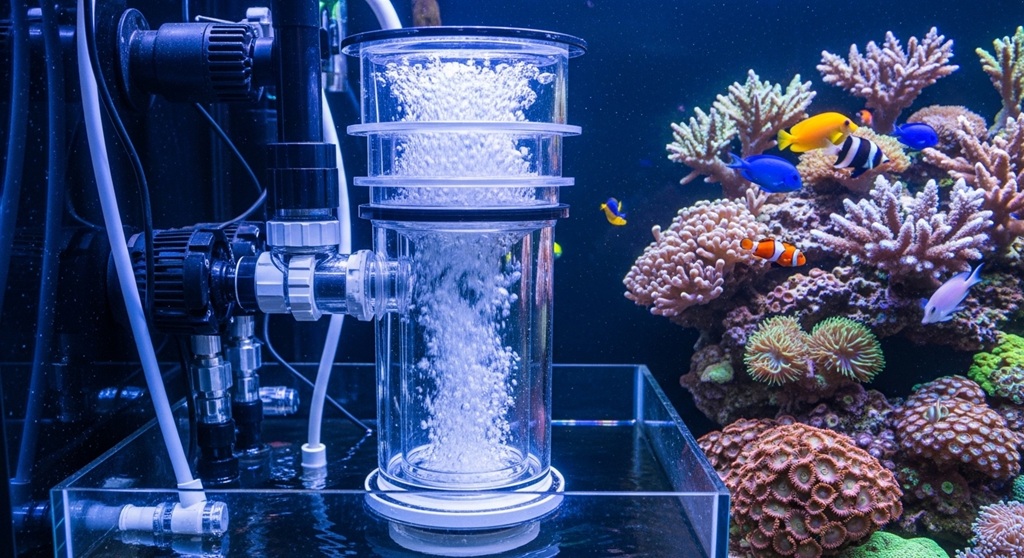
Look for essential features like a powerful and quiet pump, easy-to-clean collection cup, adjustable water level, reliable air intake, and durable materials for lasting performance and ease of use.
The quality of the skimmer’s pump directly affects foam production and noise. Removable collection cups make cleaning simple. An adjustable water level lets you fine-tune skimming for your stocking level. Check whether the air intake is clog-resistant or can be cleaned easily—the more air, the better the skimmer’s performance. Sturdy construction (acrylic or high-quality plastics) ensures your investment lasts.
- Powerful, efficient pump
- Adjustable air and water level controls
- Removable, easy-clean collection cup
- Compact footprint (fits your sump or tank)
- Low noise/vibration
- Reputable brand with strong reviews
How Does Budget Affect My Choice of Protein Skimmer?
Budget impacts skimmer size, brand, and feature quality—higher-priced models typically offer better efficiency, quieter operation, and longer life, while lower-cost skimmers may suit smaller or simpler setups.
Entry-level protein skimmers often come with basic pumps and fewer adjustment options. Mid-range and premium models feature advanced technology for better performance, silent operation, and work with a wider range of tank volumes. Investing in a proven, reliable skimmer saves money (and frustration) over time, reducing the need for replacement or upgrades. However, for nano or lightly stocked tanks, a budget-friendly skimmer may meet your needs.
| Type | Best For | Pros | Cons | Approximate Cost |
|---|---|---|---|---|
| In-Sump | Medium-Large Tanks with Sump |
Efficient, quiet, out of sight | Requires sump; can be bulky | $100 – $600+ |
| Hang-On-Back (HOB) | Nano & Small Tanks No Sump |
Easy to install; space-saving | Limited capacity; visible | $60 – $250 |
| External | Large/Commercial | Handles heavy bio-loads; customizable | Expensive; complex installation | $300 – $2,000+ |
How Much Maintenance Do Protein Skimmers Need?
Most skimmers require weekly cleaning of the collection cup, monthly or bi-monthly pump/airstone maintenance, and regular inspection to ensure peak performance and long life.
Maintenance is straightforward. Clean the collection cup’s neck and lid weekly to prevent gunk buildup, which impairs efficiency. Every 4-8 weeks, disassemble and clean the impeller, venturi, and airline tubing to remove salt and debris. Inspect for salt creep or blockages—especially in air-intake lines—so airflow remains strong. Proper maintenance ensures consistent foam production and stops organic waste from accumulating undetected. Choose a skimmer design that makes these tasks easy.
- Weekly: Empty & clean collection cup
- Monthly: Clean pump, impeller, airstone (if used)
- Quick rinse of air lines and adjust as needed

What Are Common Mistakes When Choosing a Protein Skimmer?
Common mistakes include buying an undersized skimmer, ignoring bio-load, choosing the wrong type, or skimping on build quality—leading to frustration, poor water, and extra costs.
Many reef keepers opt for skimmers rated too small for their tanks, leading to excess waste and algae. Others pick large skimmers for lightly loaded tanks, only to find the skimmer never “breaks in.” Failing to account for livestock growth or feeding habits can quickly overwhelm the skimmer. Budget units with weak pumps or cheap plastic crack easily and need frequent replacement. List your needs, research reputable brands, and read user reviews to avoid these pitfalls.
- Overlooking tank volume + sump
- Choosing by price alone
- Ignoring bio-load
- Selecting poor quality or unknown brands
- Neglecting ease of maintenance
How Can I Tell if My Protein Skimmer Is Working Properly?
A properly working skimmer produces consistent foam, collects dark, smelly skimmate, and keeps the water clearer with minimal microbubble escape.
Look for a steady stream of tiny bubbles in the skimmer’s reaction chamber and rising foam in the neck. The collection cup should fill with dark, tea-colored liquid and sludge over several days. If you notice clear water in the cup, weak bubbles, or no foam, check for blockages, correct water level, or worn pump. A well-tuned skimmer quickly removes dissolved organics and keeps your water healthy while running quietly in the background.

Are There Top Protein Skimmer Brands Recommended for Beginners?
Yes, beginner-friendly brands include Reef Octopus, Bubble Magus, AquaMaxx, Red Sea, and Tunze—all offer reliable, easy-to-maintain skimmers suitable for most reef tank sizes.
Reef Octopus is known for its durable, quiet, and highly efficient skimmers, with wide support online. Bubble Magus offers affordable options that balance quality and price, making them popular with newcomers. AquaMaxx produces compact models ideal for all-in-one nanos and small reef tanks. Red Sea and Tunze stand out for silent operation, reliability, and their extensive international support. Choosing from these brands ensures quality, decent warranty, and helpful resources for any reef keeper.

Conclusion: What Should My Next Step Be to Choose the Right Protein Skimmer?
Selecting a protein skimmer doesn’t have to be overwhelming. Identify your reef tank’s total volume, bio-load, and available space. Decide which skimmer type works for your setup. Prioritize trusted brands with effective, quiet pumps and easy maintenance features.
Read reviews, compare product options, and don’t forget to budget for quality—skimping now often costs more later. A well-chosen protein skimmer will keep your tank clean and your marine life thriving. Ready to shop? Browse reputable aquarium stores or brands listed above to find the ideal skimmer for your reef tank today!
Frequently Asked Questions (FAQ)
How often should I clean my protein skimmer?
Clean the collection cup weekly to maintain performance. Deep-clean the pump and air tubing every 4-8 weeks, or more often if skimmate production drops or the skimmer becomes noisy.
Is a protein skimmer necessary for all reef tanks?
While some small or lightly stocked tanks can manage without one, a protein skimmer is highly recommended for any established reef tank to maintain water quality, reduce algae, and keep corals healthy.
Can I oversize my skimmer for “future-proofing”?
Slightly oversizing is fine if you plan to increase tank stock, but extreme oversizing can make the skimmer ineffective on lightly loaded tanks. Aim for 1.2-1.5x your system volume at most.
What’s better: dry skimming or wet skimming?
Dry skimming produces concentrated, darker skimmate and is generally preferred. Wet skimming removes more water and fills the cup faster but can also remove trace elements. Adjust based on your tank’s needs.
Do all protein skimmers fit any sump?
No. Measure your sump compartment dimensions and water depth before buying. Many skimmers require a specific water level for optimum performance, so check product specs carefully.
How long does it take for a new skimmer to “break in”?
New skimmers typically take 1-2 weeks to break in. Oils and residues from manufacturing must wear off, and your skimmer will settle into normal foam production during this time.
Can a protein skimmer replace water changes?
No. While a skimmer removes organic waste, regular water changes are still needed to dilute nutrients and replenish trace elements essential for coral growth and fish vitality.
Read More Also: How to Maintain Aquarium During Monsoon Humidity Changes
Find out: How to Choose the Right Aquarium Air Pump for Your Fish Tank


