
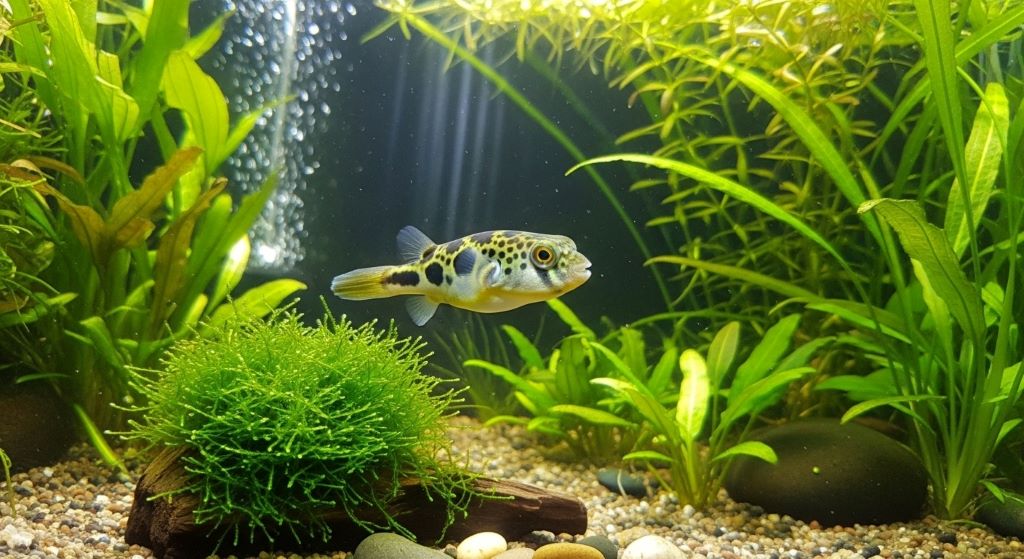
Pea puffers are tiny, intelligent fish with huge personalities. They are also notoriously aggressive. Keeping them with other fish can be tricky. However, it is not impossible. The right tank mates can coexist with pea puffers, as long as they are fast enough to stay out of trouble. This guide will help you understand how to choose fast-swimming fish that can thrive alongside your pea puffer.
Additionally, understanding your pea puffer behavior is just as important as picking the right species. Therefore, this article covers everything you need to know, from behavior patterns to specific fish recommendations.
Understanding Pea Puffer Behavior
Pea puffers, also called dwarf puffers, are native to Kerala, India. They grow to about one inch in size. Do not let their small size fool you, though. These fish are bold, curious, and territorial. They are known to nip fins and chase other fish relentlessly.
Their aggression is not random. Pea puffers tend to target slow-moving fish or fish with long, flowing fins. They see these as either competition or targets. Therefore, any fish you choose as a tank mate must be agile and quick.
Furthermore, pea puffers are highly intelligent. They explore every corner of the tank. They will notice any fish that seems easy to chase. Consequently, speed is one of the most important traits to look for in a tank mate.
Why Speed Matters in a Pea Puffer Tank
Speed is a survival tool in a pea puffer tank. A fish that can dart away quickly avoids fin nipping. It also avoids prolonged chasing, which causes stress. Stress, in turn, weakens the immune system and leads to disease.
Moreover, fast-swimming fish are often mid-water or top-water swimmers. This means they naturally stay away from the bottom, where pea puffers tend to hunt. This separation reduces direct conflict between species.
However, speed alone is not enough. A fish also needs to be the right size, temperament, and water parameter match. A fast fish that needs cold water will not survive in a tropical pea puffer tank. Therefore, you must consider several factors together.
Key Factors to Consider When Choosing Tank Mates
Swimming Speed and Agility
Look for fish that are naturally fast and active. Schooling fish are a great option because they move quickly and in coordinated groups. This makes it harder for the pea puffer to single out one target. Additionally, fish that swim in the upper or middle level of the tank spend less time near the puffer.
Fin Shape and Body Type
Avoid fish with long, flowing fins. Fancy guppies, for example, are too tempting for a pea puffer. Their large tails are easy targets for fin nipping. Instead, choose streamlined fish with short fins. These fish are harder to catch and less attractive to an aggressive puffer.
Water Parameters
Pea puffers prefer soft, slightly acidic water. The ideal temperature range is 74 to 82 degrees Fahrenheit. The pH should be between 7.0 and 8.0. Any tank mate must be able to tolerate the same conditions. Otherwise, the stress of incorrect water parameters will slow the fish down, making them vulnerable.
Tank Size
A larger tank reduces aggression. In a small tank, the pea puffer will claim the entire space. Consequently, tank mates will have nowhere to hide or escape. A tank of at least 20 gallons is recommended when keeping pea puffers with other fish. More space means less conflict.
Best Fast-Swimming Fish for a Pea Puffer Tank
Now that you understand what to look for, here are some of the best fast-swimming fish that can work as pea puffer tank mates.
Ember Tetras
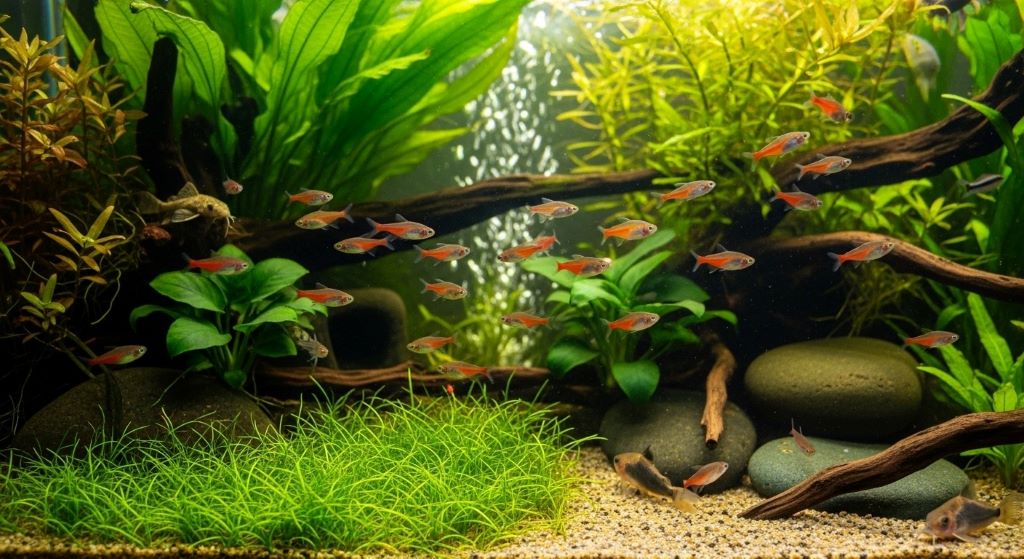
Ember tetras are small, peaceful, and surprisingly fast. They school tightly and move quickly across the tank. Their tiny size and short fins make them less of a target. Additionally, they thrive in the same water conditions as pea puffers. However, always keep them in groups of at least six so they feel secure.
Chili Rasboras
Chili rasboras are another excellent choice. They are fast, small, and stay near the top of the water column. This natural separation helps them avoid pea puffer territory. Furthermore, they are peaceful and do not compete for food in ways that cause conflict. They are also visually striking, adding color to the tank.
Neon Tetras
Neon tetras are a popular choice for community tanks, and they can work with pea puffers under the right conditions. They are quick swimmers and school closely together. However, their size is slightly larger than ember tetras, which helps them hold their own. Keep the tank well-planted to give them places to retreat.
Harlequin Rasboras
Harlequin rasboras are mid-level swimmers with good speed. They have compact, streamlined bodies that make them difficult to nip. They also school naturally, which provides safety in numbers. Therefore, they are one of the more reliable tank mate options for pea puffers.
White Cloud Mountain Minnows
White cloud mountain minnows are fast and hardy. They can handle a range of water conditions. However, they prefer slightly cooler water, so they work best in tanks set at the lower end of the pea puffer temperature range. They are active swimmers and rarely stay still long enough for a puffer to catch them.
Fish to Avoid as Pea Puffer Tank Mates
Knowing what not to choose is just as important. Some fish seem like good options but will suffer in a pea puffer tank. Bettas and other fin-heavy fish are not suitable. Their flowing fins attract aggression. Slow-moving fish like goldfish or fancy guppies will be harassed constantly. Bottom-dwellers like corydoras and loaches share the puffer space and are easy targets. Shrimp, while often suggested, are typically eaten by pea puffers, not tolerated.
Additionally, avoid aggressive fish that might bully the puffer in return. A stressed pea puffer becomes even more aggressive. The goal is a balanced, peaceful environment for all species.
How to Introduce New Fish to a Pea Puffer Tank
Introducing new fish requires care and planning. Start by rearranging the tank decorations before adding new fish. This disrupts the puffer established territory. As a result, the puffer spends time re-exploring rather than immediately chasing new arrivals.
Add the new fish in a group. Schooling fish are safer when introduced together because they move as a unit. The puffer is less likely to single out one fish from a coordinated group.
Furthermore, feed the pea puffer before introducing new fish. A full puffer is less aggressive. Use live or frozen food like bloodworms or daphnia for best results.
Finally, monitor the tank closely for the first few days. Watch for signs of stress in the new fish, such as hiding constantly, clamped fins, or visible wounds. If aggression is too high, consider separating the fish temporarily.
Setting Up the Tank for Success
A well-designed tank makes a big difference. Dense planting gives fast fish places to hide and rest. Use tall, bushy plants like java fern, hornwort, or Amazon sword. These plants break up the puffer line of sight and reduce chase behavior.
Additionally, add driftwood, rocks, and caves. These create visual barriers and resting spots. A tank that looks complex gives every fish a place to feel safe.
However, avoid overcrowding. Too many fish create competition for space and food, which increases stress. A calm, well-spaced tank is the foundation of a successful pea puffer community setup.
Conclusion
Choosing fast-swimming fish as pea puffer tank mates is both a science and an art. You need to consider speed, fin shape, water parameters, and tank size. Fish like ember tetras, chili rasboras, neon tetras, harlequin rasboras, and white cloud mountain minnows are among the best options available.
Additionally, how you set up the tank and introduce new fish matters just as much as which species you choose. A planted tank with plenty of hiding spots, combined with a well-fed puffer and careful monitoring, gives everyone the best chance of living together peacefully.
Therefore, take your time, do your research, and observe your fish regularly. With patience and the right setup, a pea puffer community tank can be one of the most rewarding aquariums you will ever keep.
Frequently Asked Questions
1. Can pea puffers live with any other fish?
Yes, but the options are limited. Pea puffers do best with fast-swimming, short-finned fish that occupy different levels of the water column. Schooling fish like ember tetras and chili rasboras are among the safest choices. However, success depends heavily on tank size and individual puffer temperament.
2. How many pea puffers can I keep together?
You can keep pea puffers together, but you need enough space. A single puffer needs about 5 gallons of water. For a group, add 3 to 5 gallons per additional fish. Keeping a single puffer or an odd number can sometimes reduce aggression, but results vary between individual fish.
3. Will pea puffers eat small tank mates?
Pea puffers will eat small invertebrates like shrimp and snails. However, they do not typically eat fish. Their aggression toward fish is mostly nipping and chasing. That said, any fish small enough to fit in the puffer mouth may be at risk.
4. What is the minimum tank size for a pea puffer with tank mates?
A minimum of 20 gallons is recommended when keeping pea puffers with other fish. A larger tank gives fast swimmers more room to escape and reduces the puffer territorial behavior. The more space you provide, the better the chances of a peaceful coexistence.
5. How do I know if my pea puffer is too aggressive for tank mates?
Watch for constant chasing, fin damage on other fish, or fish hiding and refusing to eat. These are signs that the puffer is too aggressive. In this case, consider separating the puffer into its own tank. Some individual puffers are simply too territorial to coexist with others.
Related Topics:
Natural Remedies for Ich in Reef Aquarium Fish: A Comprehensive Guide
Reef Fish Fin Rot: Causes, Prevention, and Treatment


