
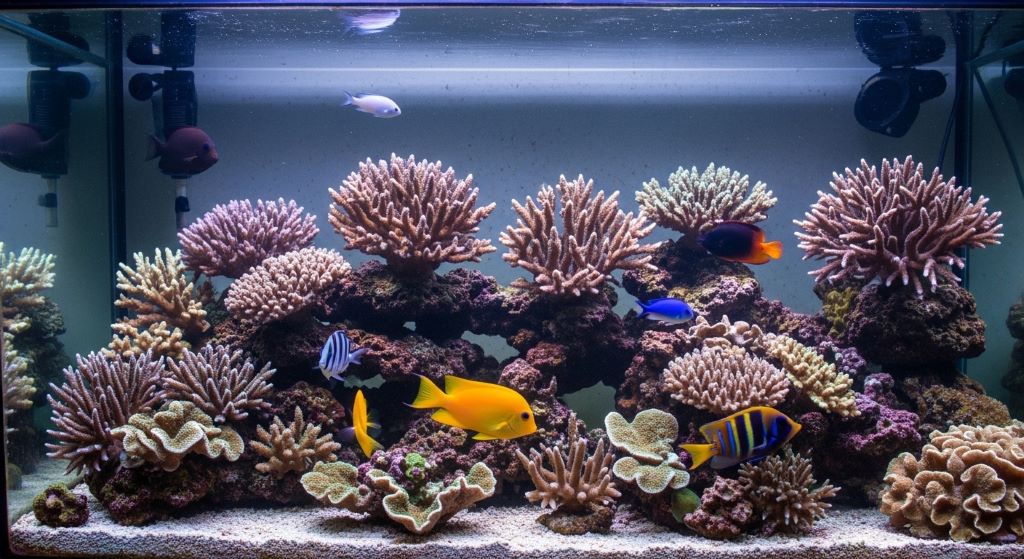
Reef fish are some of the most stunning creatures on the planet. Their vivid colors, graceful movements, and complex behaviors make them a joy to watch. However, keeping them healthy at home takes more than just a tank and some water. You need to recreate their natural ocean environment as closely as possible. This guide will walk you through every step of building the perfect reef habitat for your fish.
Understanding What Reef Fish Need
Before you buy a single piece of equipment, it helps to understand how reef fish live in the wild. In the ocean, they enjoy stable water temperatures, a rich mix of minerals, and a carefully balanced ecosystem. They hide in coral, graze on algae, and interact with hundreds of other species every day.
Therefore, your home aquarium must mimic these conditions. The closer you get to nature, the healthier and happier your fish will be. Do not worry if this sounds complex. With the right knowledge, it is very achievable.
Choosing the Right Tank Size
Size matters a great deal in reef keeping. A larger tank is almost always better. Small tanks are harder to manage because water conditions can change rapidly. A minor mistake in a 20-gallon tank can be catastrophic. In a 100-gallon tank, however, the same mistake is far less dangerous.
For beginners, a tank between 75 and 125 gallons is a solid starting point. This size gives reef fish enough room to swim freely. It also provides enough water volume to keep conditions stable. Additionally, larger tanks support a wider variety of fish and coral species.
Always choose a tank made from thick, high-quality glass or acrylic. Place it on a sturdy stand that can support its full weight. A 100-gallon tank filled with water, rock, and equipment can weigh over 1,000 pounds.
Setting Up the Filtration System
Good filtration is the heart of any reef tank. Without it, waste builds up and poisons your fish. There are three types of filtration you need to think about.
The first is mechanical filtration. This removes solid particles like uneaten food and fish waste from the water. Sponge filters and filter socks are common tools for this.
The second is biological filtration. This is where beneficial bacteria break down harmful ammonia into less toxic substances. Live rock is the best biological filter you can use in a reef tank. It is full of these helpful bacteria.
The third is chemical filtration. Activated carbon is the most popular choice here. It removes dissolved toxins and keeps the water clear and odor-free.
Many reef keepers also use a protein skimmer. This device pulls organic waste out of the water before it can break down. It is one of the most valuable tools you can add to your system.
Getting the Water Chemistry Right
Water chemistry is where many beginners feel overwhelmed. However, if you take it step by step, it becomes manageable. There are several key parameters you need to monitor and maintain.
Salinity should sit between 1.025 and 1.026 specific gravity. Use a refractometer to measure this accurately. Hydrometers are less reliable and not recommended for reef tanks.
Temperature needs to stay between 76 and 82 degrees Fahrenheit. Fluctuations outside this range cause stress and can lead to disease. A reliable heater and a thermometer are essential.
pH should remain between 8.1 and 8.3. This is the natural pH of tropical ocean water. You can raise pH by increasing water flow and gas exchange.
Ammonia and nitrite must always read zero. Any detectable level of these chemicals is dangerous. Nitrate should be kept below 10 parts per million for a healthy reef.
Additionally, calcium, alkalinity, and magnesium are critical for coral growth. Calcium should be around 400 to 450 ppm. Alkalinity should sit between 8 and 12 dKH. Magnesium is best kept between 1,250 and 1,350 ppm.
Test your water at least once a week. Consistency is key.
Selecting the Right Lighting
Lighting does two important jobs in a reef tank. First, it allows corals to photosynthesize and grow. Second, it creates the beautiful shimmering effect that makes reef tanks so visually striking.
LED lights are the top choice for most reef keepers today. They are energy-efficient, long-lasting, and highly customizable. Many LED systems allow you to program sunrise and sunset cycles, which is very beneficial for your tank’s inhabitants.
The amount of light your tank needs depends on the corals you keep. Soft corals and low-light species do well with moderate lighting. Stony corals and clams often need intense, high-quality light.
Most reef keepers run their lights for 8 to 10 hours per day. A consistent light cycle helps reduce algae growth and keeps your fish stress-free.
Aquascaping with Live Rock
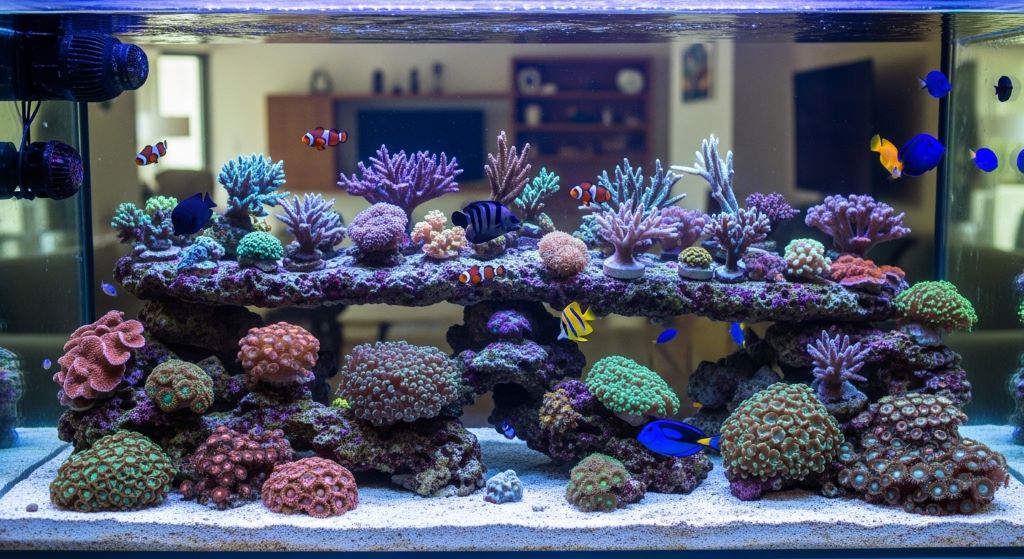
Live rock is one of the most important elements in any reef tank. It provides biological filtration, as mentioned earlier. However, it also serves as the physical foundation of your reef’s landscape.
When aquascaping, think about structure and flow. Create open caves, ledges, and overhangs. These give fish places to hide and feel safe. Leave open sandy areas at the bottom too. Many species love to rest or forage in the sand.
Use about one to two pounds of live rock per gallon of water as a general guide. Stack the rock securely so it cannot collapse. A falling rock can crack your tank or injure your fish.
Furthermore, good aquascaping improves water flow around the rock. This helps prevent dead spots where waste can accumulate.
Adding Water Flow
Reef fish and corals thrive in moving water. In the ocean, constant currents bring food, oxygen, and nutrients to every corner of the reef. Your tank needs to replicate this.
Powerheads and wavemakers are the best tools for creating water movement. Aim for a total flow rate of 20 to 40 times your tank’s volume per hour. For a 100-gallon tank, that means 2,000 to 4,000 gallons per hour of total flow.
Position your powerheads to create a random, swirling current. Avoid pointing them directly at corals or fish. Instead, aim them at the rock and glass so the flow bounces around naturally.
Cycling Your Tank Before Adding Fish
Never add fish to a new tank right away. The tank must first go through a process called the nitrogen cycle. This establishes the beneficial bacteria your tank needs to process waste.
The cycling process usually takes four to eight weeks. During this time, ammonia rises, then nitrite spikes, and finally both drop to zero as bacteria colonies grow. Only when ammonia and nitrite read zero is your tank ready for fish.
You can speed up the cycle by adding live rock, a small amount of fish food, or a bacterial starter product. Test your water every few days to track progress.
Choosing Compatible Fish and Coral
Not all reef fish get along. Some are territorial. Others are aggressive feeders that outcompete peaceful species. Therefore, research every fish carefully before adding it to your tank.
Good beginner reef fish include clownfish, firefish, royal grammas, and chromis. These species are generally peaceful, hardy, and easy to feed. They also adapt well to aquarium life.
When it comes to corals, start with easier species. Mushroom corals, zoanthids, and soft corals are forgiving and do not require extreme water conditions. As you gain experience, you can add more demanding stony corals.
Always add fish slowly. Introduce one or two new fish at a time, and wait several weeks between additions. This gives the tank time to adjust and reduces aggression between established and new residents.
Feeding Your Reef Fish Properly
Feeding seems simple, but it plays a big role in water quality. Overfeeding leads to excess waste, which raises nitrate levels and fuels algae growth.
Feed your fish small amounts two to three times a day. They should finish all the food within two minutes. If food is sinking to the bottom uneaten, you are feeding too much.
Most reef fish do well on a varied diet. Offer frozen mysis shrimp, brine shrimp, and quality flake or pellet food. Many species also benefit from algae sheets or nori. A varied diet keeps fish healthy and their colors vibrant.
Maintaining Your Reef Tank
Regular maintenance keeps your reef thriving. Set up a weekly and monthly routine to stay on top of things.
Each week, test your water parameters, remove algae from the glass, and check your equipment. Perform a water change of 10 to 20 percent every week or two. Fresh saltwater replenishes trace elements and dilutes nitrate.
Each month, clean your protein skimmer, rinse filter socks, and inspect your powerheads. Check your lights for any dimming or color shifts.
Over time, maintenance becomes second nature. The effort you put in pays off with a vibrant, healthy reef that you can enjoy for years.
Conclusion
Creating the perfect habitat for reef beauties at home is a rewarding journey. It requires the right tank size, reliable filtration, stable water chemistry, proper lighting, smart aquascaping, and consistent maintenance. However, none of these steps are beyond the reach of a dedicated hobbyist. Start slowly, research thoroughly, and build your reef step by step. With patience and care, your home aquarium can become a living masterpiece full of color and life.
Frequently Asked Questions
How long does it take to set up a reef tank before adding fish?
The nitrogen cycle must complete first. This typically takes four to eight weeks. Once ammonia and nitrite both read zero, the tank is ready for its first fish.
What is the easiest reef fish for beginners?
Clownfish are widely considered the best starter reef fish. They are hardy, peaceful, and adapt well to aquarium life. Royal grammas and firefish are also great beginner choices.
How often should I change the water in a reef tank?
Most reef keepers perform water changes of 10 to 20 percent every one to two weeks. Regular changes replenish trace elements and help keep nitrate levels low.
Can I mix different coral species in one tank?
Yes, but research compatibility first. Some corals release toxins that harm neighboring species. Always leave space between corals so they do not sting each other as they grow.
What should I do if my reef fish stops eating?
First, check your water parameters. Poor water quality is a common cause of appetite loss. Also observe the fish for signs of disease such as spots, torn fins, or unusual behavior. If parameters are fine, try offering a different type of food to stimulate interest.
Related Topics:
Fixing Cloudy Water After Substrate Change: Step-by-Step Guide for Crystal Clear Aquarium Water
Shining a Light on Longevity: Maximizing the Life of Your Aquarium Bulbs


